
Galileo Galilei is one of the most important humans who has ever lived: the man who turned a crude telescope on the sky and saw the moons of Jupiter, the phases of Venus, and the rough face of the Moon, and who dared to say that the Earth moves around the Sun. For that, he was condemned by the Roman Inquisition, forced to kneel and recant, and spent his last years under house arrest. He died near Florence on 8 January 1642, half‑blind and still secretly convinced he was right. He was buried quietly in a side chapel of Santa Croce, the great Franciscan basilica of Florence — not in the grand tomb he deserved, but in a small space, because Church authorities still considered him suspect.
For 95 years, his body lay there in peace. Then his admirers came for him.
THE HORROR In 1737, nearly a century after Galileo’s death, his disciples and the Grand Dukes of Tuscany finally won their long fight: Rome relented enough to allow the great heretic a monumental tomb in Santa Croce, opposite Michelangelo’s. His coffin was to be opened and his remains moved from their hidden corner to a place of honour in the main nave.
On 12 March 1737, the coffin was raised and opened. Inside lay the bones of Galileo Galilei. Around them stood not just officials, but admirers — antiquarians, scholars, men who believed that Galileo was a kind of secular saint of reason, and that physical pieces of him were holy objects.
As they looked down at the skeleton of the man who had changed the universe, some of them quietly began to cut. From his right hand they removed three fingers — the thumb, index finger, and middle finger, the ones that had held his pen and pointed his telescope at the sky. They took a tooth from his mouth, and a vertebra from his spine, the fifth lumbar bone. In that moment, the condemned heretic was quite literally turned into a relic.
One of those fingers was quickly mounted on a little pedestal and kept as a museum piece in Florence, displayed like a saint’s bone in a reliquary. The vertebra was sent to Padua, the university town where Galileo had once taught, and was carefully preserved there. The other two fingers and the tooth were taken by an Italian marquis, Anton Francesco Gori. He kept them enclosed in an ornate blown‑glass vase, which in turn was housed inside a wooden case topped with a carved bust of Galileo — a tiny shrine, a scientist’s body parts kept like holy fragments.
For a time, their journey was recorded. They passed down through the Gori family. Then, around 1905, all trace of them vanished. The thumb, finger, and tooth were lost. For more than a hundred years, no one knew where they were.
THE MODERN RELIC Then, in 2009, they came back.
At an auction of religious artifacts in Florence, a wooden case from the 18th century was listed as an unidentified reliquary. It bore the bust of Galileo. Inside, a collector found an egg‑shaped glass vial. Inside the vial were two tiny, dried fingers and a single tooth. Intrigued, but not sure what he had, the buyer contacted Florence’s cultural authorities and the director of the city’s history of science museum.
Careful research followed. Historians compared the case and the glass vial with 18th‑century descriptions of Gori’s Galileo relics, checked family documents, and traced the chain of ownership. Piece by piece, the evidence lined up: the bust matched old engravings, the glass matched descriptions, the provenance matched records. The conclusion was extraordinary. The museum announced that the tooth and the two fingers — the thumb and index finger — were genuine relics of Galileo Galilei, taken from his corpse in 1737 and lost for a century.
Today, those remains are on public display in the Museo Galileo on the Arno embankment in Florence. In a glass case, egg‑shaped jars cradle three fingers from Galileo’s right hand — the middle finger that was already in the collection, plus the rediscovered thumb and index finger — and his last remaining tooth. Nearby sits the marble pedestal that has long displayed his middle finger alone, pointing upward, like the most famous “raised finger” in history.
Elsewhere, in Padua, his vertebra is still preserved. Dentists who have examined the tooth say it shows signs of grinding and maybe gastric reflux; scientists see the small marks of everyday discomfort on the remains of a man who stared at the cosmos.
What makes the whole story so strange is how closely it mirrors medieval sainthood. For centuries the Catholic Church had taken bones and body parts from saints as relics, encased them in glass, and displayed them to the faithful. In the 18th century, admirers of Galileo — the man once condemned by that same Church — did exactly the same thing. They treated his fingers, tooth and vertebra as relics of a secular saint of science, a symbol of the fight for freedom of thought.
If you walk into the Galileo Museum in Florence today, among the telescopes, globes and instruments, you will find a small display that is always crowded. It is not a machine. It is three fingers and a tooth, floating in glass. The hand that wrote “And yet it moves,” raised forever under museum lights.
Nearby on the Dark Atlas
- The Assassination Plot Inside a Cathedral
Rival bankers struck during Sunday Mass, but one Medici brother fought his way out alive.
Florence, Italy · 1478 · same site
- The Bones That Remembered The Black Death
Trade ships carried plague into Italy, and within months whole families vanished into forgotten charnel chapels.
Florence, Italy · 1348 · same site
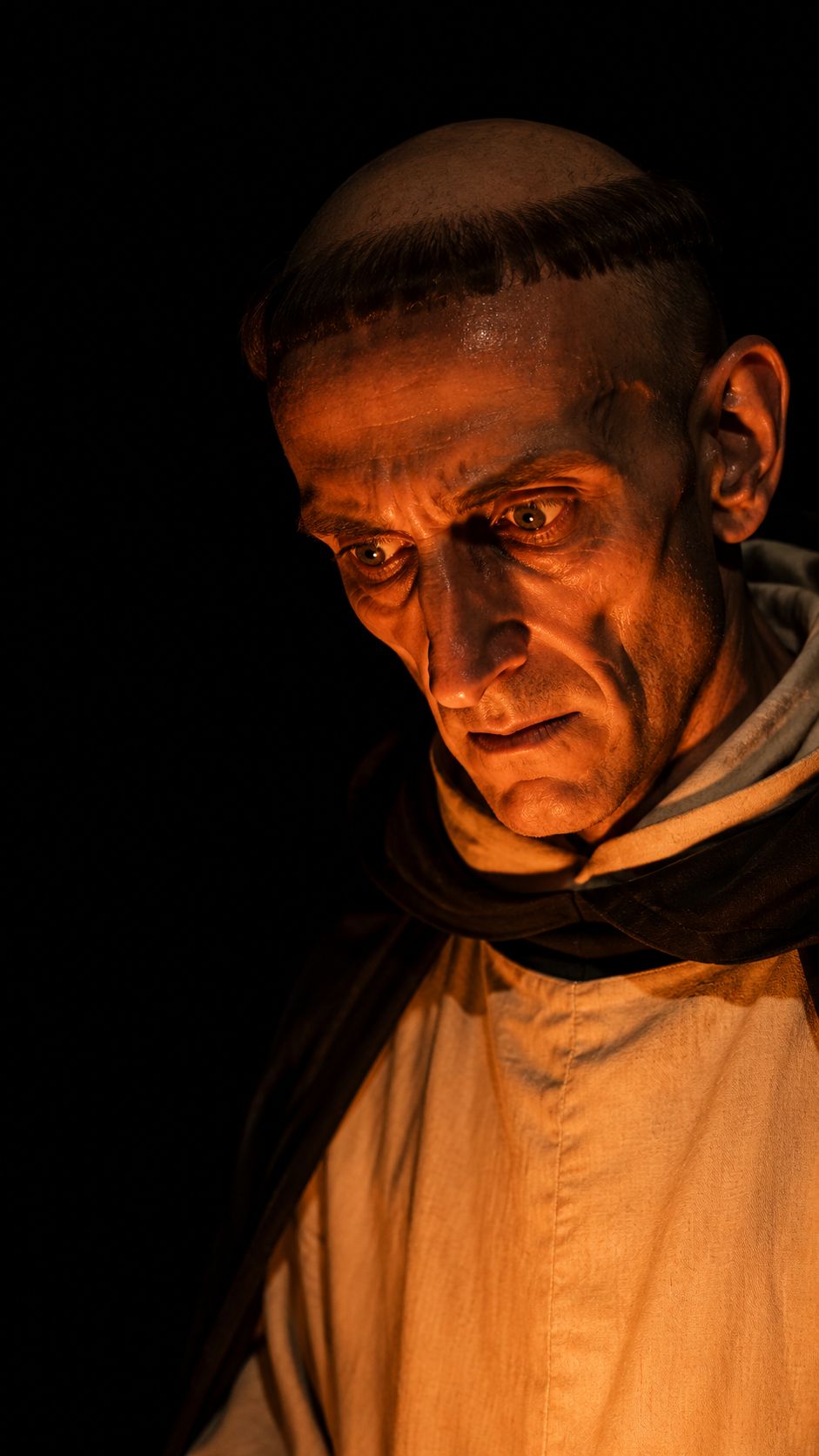 The Preacher Who Burned Art And Then Burned Himself
The friar who torched Florence's treasures in a pyramid of vanity ended up executed in the very same square.
Piazza della Signoria, Florence, Italy · 1497 · same site
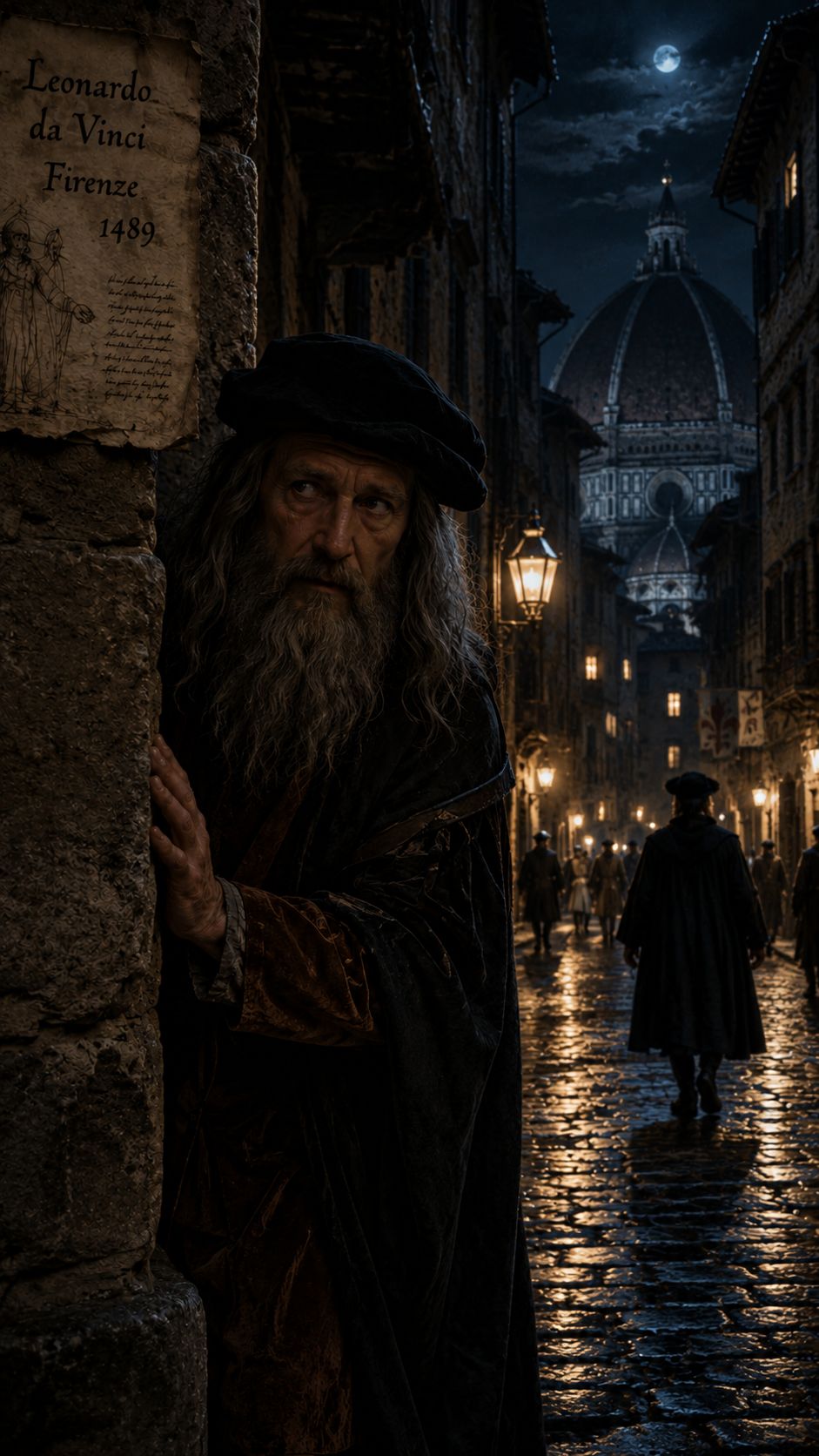 The Secret Dissections Behind The Mona Lisa
By night, alone in the morgues of Florence and Milan, the painter of the Mona Lisa was cutting open at least thirty human corpses.
Florence, Italy · 1500 · same site
More like this
- The Leper King's Story No Film Would Show
Kingdom of Heaven gave him a dignified death behind a silver mask, the truth was far crueller.
Jerusalem, Israel · 1185
- The Heretic Burned By The Reformers Who Fled Rome
Calvin's Geneva burned a brilliant Spanish physician for his beliefs, then, centuries later, erected a monument of atonement.
Champel, Geneva, Switzerland · 1553
- The Truth Behind The Elephant Man
The real man behind the famous film was quieter, stranger and far more heartbreaking than any screenplay.
Whitechapel, London, United Kingdom · 1890
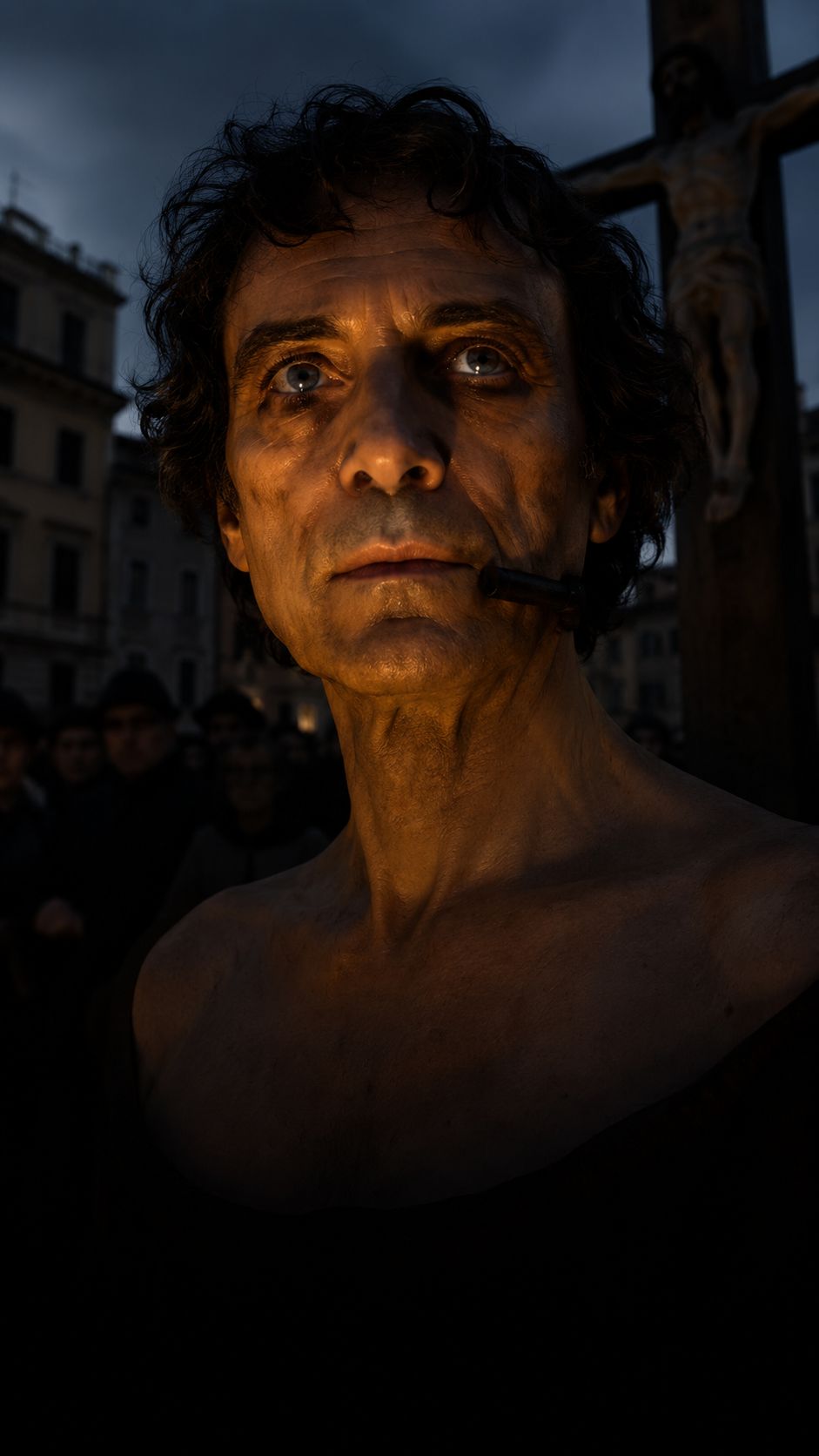 The Heretic Burned For What He Thought
After eight years of imprisonment, he refused to recant his vision of an infinite universe, and paid with his life.
Campo de' Fiori, Rome, Italy · 1600