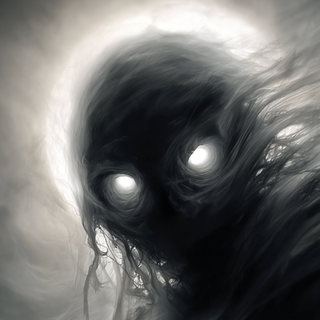
On 19th May 1845, two Royal Navy ships sailed from Greenhithe on the Thames to the sound of cheering crowds. They were HMS Erebus and HMS Terror — reinforced with iron, fitted with steam engines and screw propellers, carrying central heating, a library of over a thousand books, and three years of tinned provisions. They were the most advanced polar vessels on earth. Aboard were 129 officers and men under Sir John Franklin, a fifty-nine-year-old veteran explorer, sent to complete the last unmapped stretch of the Northwest Passage.
In late July 1845, two whaling ships met them in Baffin Bay, waiting for the ice to open. That was the last time any European saw them alive. All 129 men vanished, and Britain spent the next decade and a fortune searching for them.
The Horror
The story came back in pieces, over 170 years, and each piece was worse than the last.
The first winter, at Beechey Island, three men died and were buried in the frozen gravel — John Torrington, a twenty-year-old leading stoker, on New Year’s Day 1846; John Hartnell three days later; William Braine that April. Their headboards stood alone in the Arctic for over a century.
Then, in 1859, a search party found a cairn on the northwest coast of King William Island containing a single printed form covered in two sets of handwriting. The first message, dated May 1847, ends with the words All well. The second was scrawled around the margins of the same page in April 1848, and it is one of the bleakest documents in the history of exploration. Sir John Franklin had died on 11th June 1847. Twenty-four men were already dead. The ships had been trapped in the ice for a year and a half and had just been abandoned. The 105 survivors, under Captain Francis Crozier, were setting out on foot across the ice for a river hundreds of miles to the south. Every one of them died.
And then came the part Victorian Britain refused to accept. In 1854, the explorer John Rae collected testimony from Inuit who had encountered the dying men and had later found their remains. The Inuit accounts were precise, detailed and consistent — and they included the fact that the last survivors had resorted to cannibalism. Britain’s reaction was fury. The reports were denounced as slander against the Royal Navy. Charles Dickens himself published attacks dismissing the Inuit testimony. Rae’s career never recovered.
The Inuit were telling the truth.
In 1984 and 1986, the anthropologist Owen Beattie and his team exhumed the three graves on Beechey Island. The permafrost had preserved the bodies almost perfectly. Torrington was lifted out with his hair, his eyelashes, his fingernails, the fabric of his shirt, and his face intact — a twenty-year-old boy wasted down to under six stone, his mouth bound shut with cloth, his eyes half open. The photographs taken that day are among the most disturbing images in the history of archaeology, because he does not look like a specimen. He looks like a man who has just been woken.
The remains scattered on King William Island told the rest. Forensic examination in the 1990s found cut marks on around a quarter of the bones examined — the marks made by knives removing flesh. Later analysis found bone ends broken open and polished from being boiled, the signature of end-stage cannibalism: men cracking the skeletons of their shipmates for the marrow inside. And in 2024, DNA and genealogical work finally put a name to one of those cut-marked bones. It was a jaw. It belonged to Captain James Fitzjames, commander of HMS Erebus — a senior officer, eaten by his own crew. Rank had stopped meaning anything at all.
The Modern Relic
Almost all of it still exists, and much of it can be visited.
The three graves on Beechey Island are still there in the gravel, marked by headboards, on one of the loneliest beaches on the planet — a stop on Arctic expedition cruises today. The Victory Point note survives and is held by the National Maritime Museum in Greenwich. The photographs of Torrington’s face are a click away.
And the ships were found. In September 2014, a Parks Canada search team located HMS Erebus on the seabed off King William Island. In September 2016, HMS Terror was found in a bay to the north — largely because an Inuk crew member named Sammy Kogvik mentioned that he had once seen a wooden mast sticking out of the sea ice there. Both discoveries came down, in the end, to Inuit knowledge that had been dismissed for 160 years.
Both wrecks are astonishingly intact. Terror sits upright with her hull sound, her windows unbroken, plates still stacked on shelves, and the ship’s bell in place. Divers have brought up sealed bottles, a hairbrush with hair still caught in it, and an officer’s desk with drawers unopened. The site is a National Historic Site of Canada, co-managed with the Inuit Heritage Trust — the descendants of the only people who ever knew where it was — and archaeologists are still going down every summer, opening drawers no one has opened since 1848, looking for the ship’s papers that might finally explain how 129 men died.
Nearby on the Dark Atlas
 The Real Death Behind Into The Wild
A young idealist walked into the Alaskan wilderness seeking freedom, and died there alone and afraid.
Stampede Trail, Denali, United States · 1992 · 2302 km away
- The Real Survival Story Behind The Revenant
Mauled by a bear and left for dead, a frontier trapper crawled across hundreds of miles of wilderness to survive.
Shadehill, South Dakota, United States · 1823 · 2606 km away
- The Dark Secrets Behind The Wizard Of Oz
Behind the beloved fairy tale lies a coded political meaning and a shocking documented act by its gentle author.
Aberdeen, South Dakota, United States · 1900 · 2627 km away
 Twenty Minutes to the Bottom of the River
A freighter loomed out of the fog and struck her broadside — she was gone beneath the St. Lawrence in under fifteen minutes.
Rimouski, Canada · 1914 · 2768 km away
More like this
 The Rape Trial That Ended In Trial By Combat
A woman's accusation of rape led to France's last judicial duel, with her own life staked on the outcome.
Paris, France · 1386
- The Parish Registers Of The Beast's Victims
Between 1764 and 1767 something killed roughly a hundred people, recorded in the registers as 'devoured by the beast.'
Saugues, France · 1764
- The Manufacturing Of England's Most Haunted House
For decades it was called the most haunted house in England, until its ghost story revealed how a haunting gets made.
Borley, Essex, United Kingdom · 1929
- The Truth Behind The Elephant Man
The real man behind the famous film was quieter, stranger and far more heartbreaking than any screenplay.
Whitechapel, London, United Kingdom · 1890