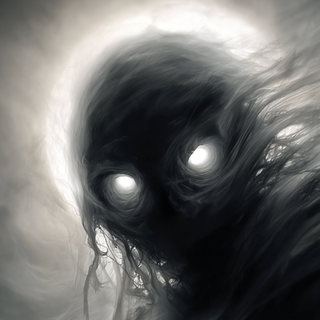
Sleeping Beauty is one of the most beloved and romantic fairy tales in the world — the story of a cursed princess who falls into an enchanted sleep, and is woken, after a hundred years, by the kiss of a handsome prince who has fallen in love with her. It is the very picture of innocent, magical romance. And it is a heavily sanitised version of a much older, and genuinely disturbing, story — an original tale in which there is no loving kiss at all, and in which the sleeping woman is the victim of a crime rather than the recipient of a romance.
To understand it, you have to go back past the versions we know. The Disney film, and the ballet, are based mainly on two earlier literary tellings: the French version written by Charles Perrault in 1697, and the German version, “Little Briar Rose,” collected by the Brothers Grimm in 1812. But neither of those was the original. The first full fairy-tale version of the Sleeping Beauty story was published in Italy in 1634, in a collection of fairy tales called the Pentamerone, by a Neapolitan poet and courtier named Giambattista Basile. Basile was, in effect, the Brothers Grimm of his age, gathering old folk tales — his collection contains the earliest known versions of Cinderella and Rapunzel too. But his tales were emphatically not written for children. They were dark, earthy, adult stories. And his version of Sleeping Beauty, called “Sun, Moon and Talia,” is one of the darkest of all.
In Basile’s original, the sleeping heroine is a lord’s daughter named Talia. As in the familiar tale, a prophecy warns that she will be endangered by flax, and one day a splinter of flax slips under her fingernail and she falls instantly into a deep, death-like sleep. Her grief-stricken father cannot bear to bury her, and instead lays her body on a velvet chair in one of his country mansions, and abandons the house forever, leaving her there, asleep and alone.
The Horror
And here the story departs, brutally, from the version we know. Some time later, a king out hunting in the woods follows his falcon to the abandoned house. He goes inside, and finds the beautiful Talia, asleep and utterly helpless, unable to be woken. And instead of a chaste kiss, the king does something the modern fairy tale exists entirely to erase: overcome by her beauty, he rapes her, there in her enchanted sleep, and then simply leaves, returning to his own city and, for a long time, forgetting all about her. There is no love. There is no rescue. There is an unconscious woman, and a crime committed against her while she cannot resist or even know it is happening. This is the true origin of the “awakening” at the heart of Sleeping Beauty.
Talia does not wake from this. She sleeps on — and, still unconscious, she discovers none of it, even as the consequences unfold within her own body. Nine months later, still deep in her enchanted sleep, Talia gives birth to twins, a boy and a girl. In the story, fairies attend her and help the newborns to nurse from their sleeping mother. And it is one of these infants who finally breaks the enchantment — not a prince, not a kiss, but a hungry baby. One day, one of the twins, unable to find its mother’s breast, instead begins to suck on Talia’s finger — and draws out the splinter of flax that had cursed her. And with the splinter gone, Talia at last awakens: to find herself alone in an abandoned house, no longer a maiden, and the mother of two children she never knew she conceived. She names them Sun and Moon.
And the story does not even end there — it gets darker still. The king eventually remembers the sleeping woman and returns, finds Talia awake with their two children, and is delighted. But there is a terrible complication: the king is already married. When his wife, the queen, discovers her husband’s secret second family, she is consumed by rage — and she plots a monstrous revenge. She secretly orders that Talia’s two little children, Sun and Moon, be captured, killed, cooked, and served to the unsuspecting king to eat for his dinner. It is only a kind-hearted cook, who cannot bring himself to murder the children, who saves them, hiding them away and serving the king lamb instead while the queen gloats that he is devouring his own babies. When the queen’s full plan is uncovered — for she also intends to burn Talia alive — the king turns her fury back upon her, and the wicked queen is thrown into the very fire she had prepared for the others.
The Modern Relic
This grim, adult tale of assault, adultery, and attempted cannibalism was, over the following centuries, gradually cleaned up into the children’s story we know. When Charles Perrault retold it in France in 1697, he removed the rape entirely — his sleeping princess is woken respectfully, and the horror is toned down, though he kept a version of the cannibal mother-in-law, transformed into an ogress. When the Brothers Grimm collected their “Little Briar Rose” in 1812, they simplified it further, cutting the second half completely, so that the story now ended, cleanly and happily, at the moment of awakening — which they finally rendered as the famous, innocent kiss. The disturbing origins were buried, layer by layer, until only the romance remained, ready for the ballet and, eventually, the Disney film of 1959.
The relic is that the original still exists, in black and white, for anyone who wants to read what the fairy tale was hiding. Basile’s “Sun, Moon and Talia” survives in the Pentamerone, one of the foundational texts of European fairy tales, still in print and studied around the world. Folklorists have a name for this whole family of stories — tale type 410 — and they trace its dark lineage plainly. And the original tale ends not with “happily ever after,” but with one of the most cynical morals in all of fairy-tale literature — a line, from Basile himself, that curdles the whole romance: “Those whom fortune favours find good luck even in their sleep.” It is a chilling summary of a story in which a sleeping woman’s assault is framed as her good fortune, because it eventually made her a queen. The gentle tale we tell children about a kiss that wakes a sleeping princess was built, deliberately and over centuries, directly on top of something far darker — and the truth of what “Sleeping Beauty” originally was is still there, in a 1634 book, waiting on the page.
Nearby on the Dark Atlas
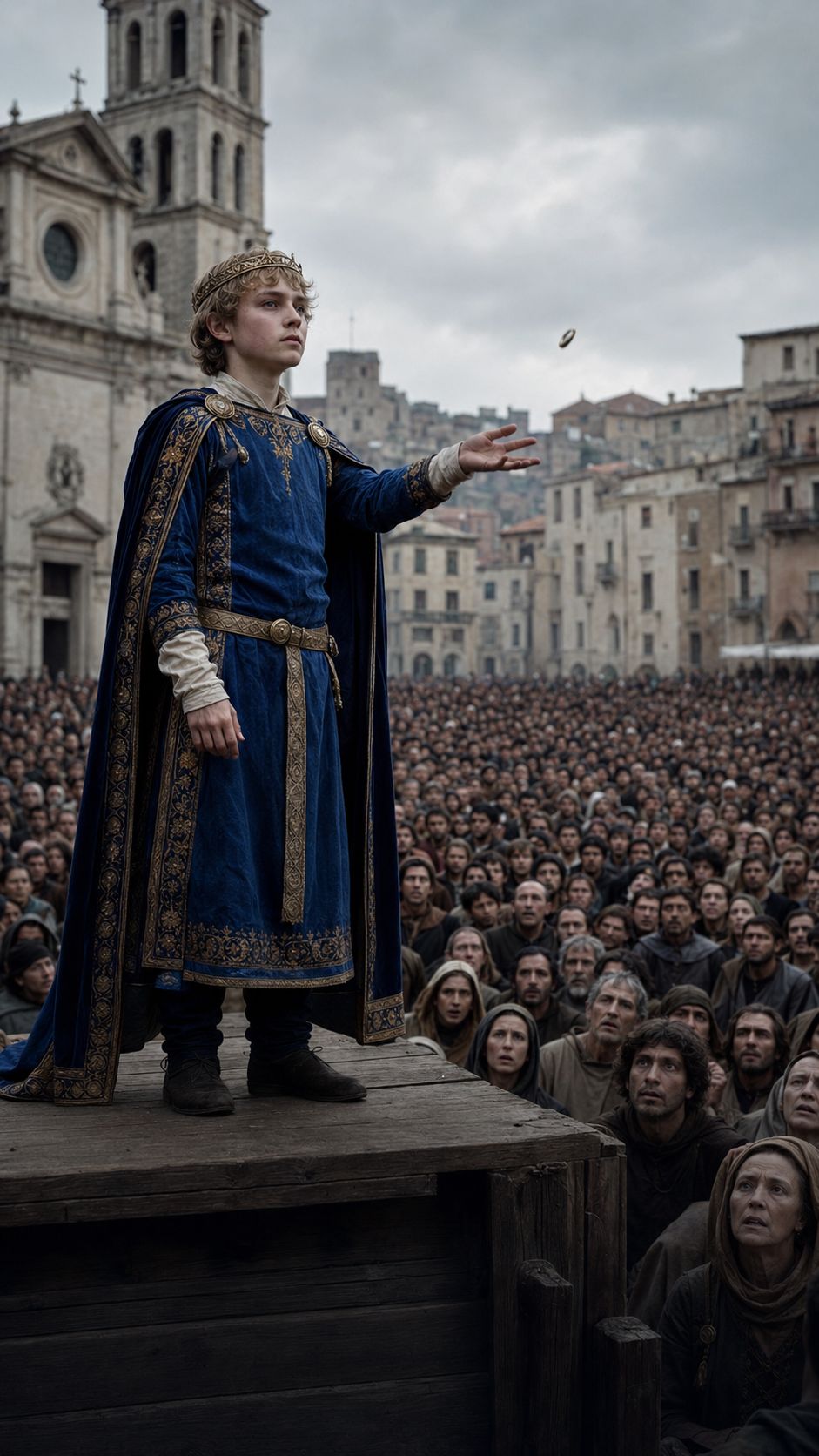 The Boy-King Beheaded In A Market Square
The last heir of a glittering medieval dynasty was publicly beheaded at sixteen, horrifying all of Christendom.
Naples, Italy · 1268 · same site
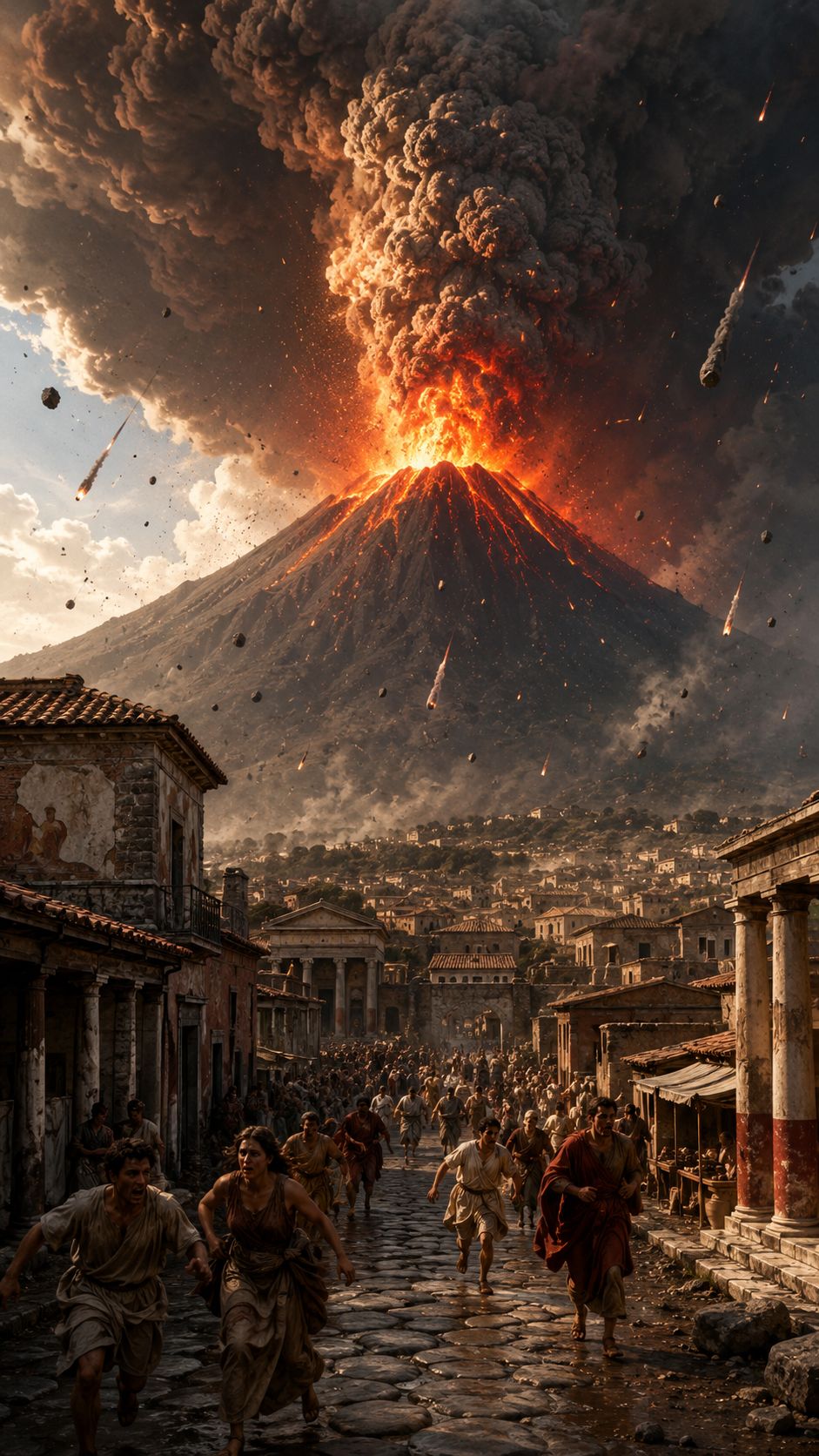 The Boathouses of Herculaneum
Three hundred people sheltered from Vesuvius in stone boathouses, and superheated gas killed them all in an instant.
Herculaneum, Italy · 79 · 8.5 km away
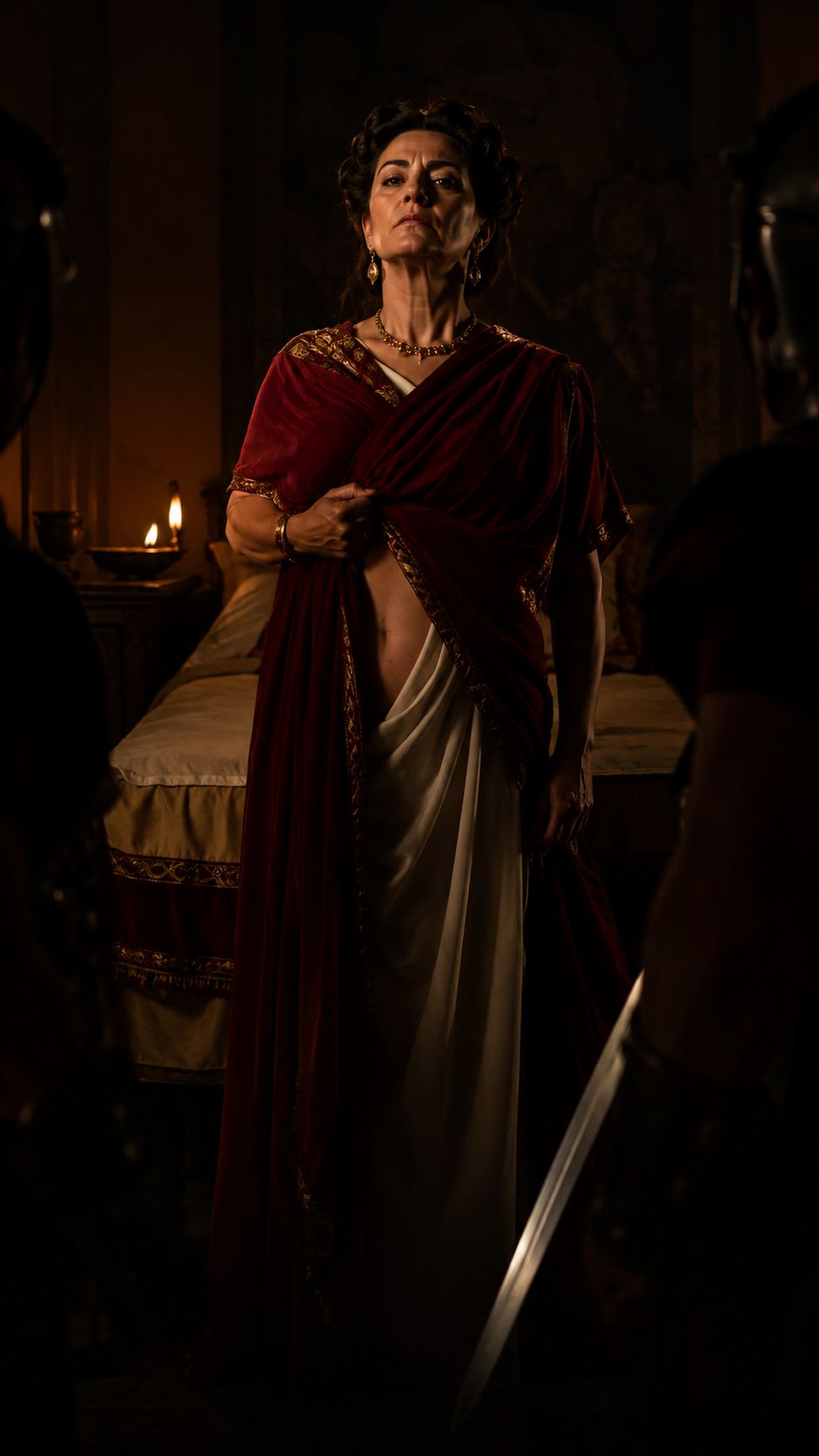 Strike The Womb That Bore Nero
Sent assassins by her own son, she bared her stomach and dared them to strike the womb that had borne an emperor.
Baiae, Italy · 59 · 17 km away
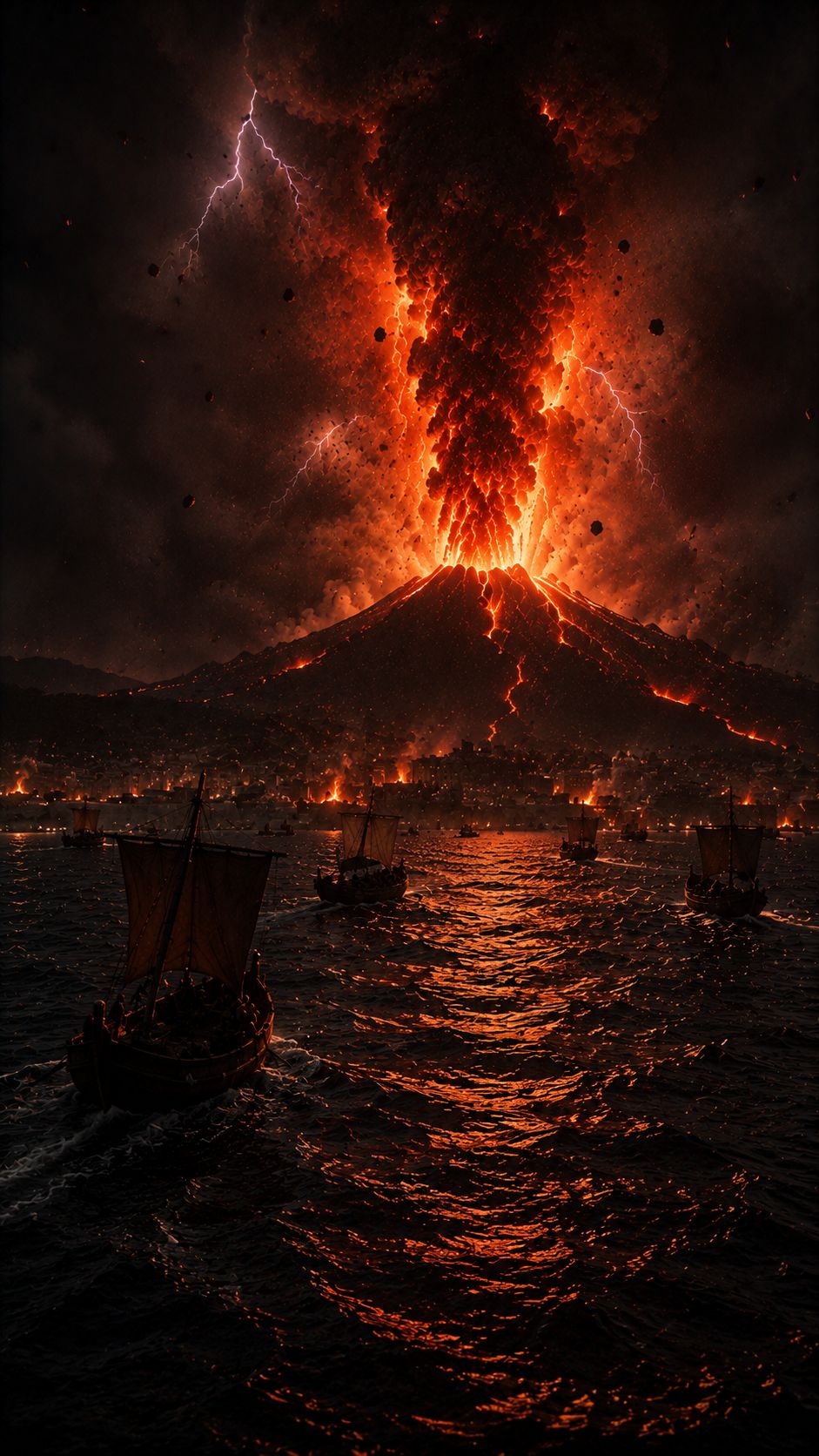 The Naturalist Who Sailed Toward Vesuvius
As Vesuvius erupted, the Roman fleet commander sailed straight toward the disaster to study it, and it killed him for his curiosity.
Stabiae, Italy · 79 · 25 km away
More like this
- The Murder Dickens Turned Into Fiction
A cold, calculated murder buried a body in a Bermondsey kitchen, and became fodder for the country's most famous novelist.
Bermondsey, London, United Kingdom · 1849
- The Chair No One Is Allowed To Sit In
A murderer's cursed armchair now hangs on a museum wall, five feet off the ground, so no one can sit in it again.
Thirsk, United Kingdom · 1702
- The Poisoner Who Weaponised A Town's Sweet Shops
She poisoned an entire town's confectionery to disguise the murder of a woman she hated, killing a child she never met.
Brighton, United Kingdom · 1871
 The Rape Trial That Ended In Trial By Combat
A woman's accusation of rape led to France's last judicial duel, with her own life staked on the outcome.
Paris, France · 1386