On 29 July 1030, on a field called Stiklestad, a Viking king who had lost his throne returned from exile to take it back by force.
He did not succeed.
Olaf Haraldsson was killed. His army was defeated. His enemies appeared to have won completely.
And yet, within a year, the fallen king was being revered as a saint. In death, Olaf gained a title no rival could ever take from him: Rex Perpetuus Norvegiae — the Eternal King of Norway.
His name was Olaf Haraldsson, later Saint Olaf. And this is how a defeated Viking king became the most important saint in Norwegian history.
Olaf began his life in the Viking world of raids, warbands, and shifting loyalties. Before becoming king, he fought abroad, including in the British Isles. He returned to Norway around 1015 and established himself as king, gradually consolidating authority over a land divided between powerful regional chieftains.
His reign was not gentle.
Olaf strengthened royal authority, crushed opponents, and pushed the Christianisation of Norway. Earlier rulers had introduced Christianity, but Olaf enforced it more aggressively through law, political pressure, and sometimes violence. To his supporters, he was building a united Christian kingdom. To many local rulers, he was an overbearing king attacking old customs and their independence.
That resistance gave his enemies an opening.
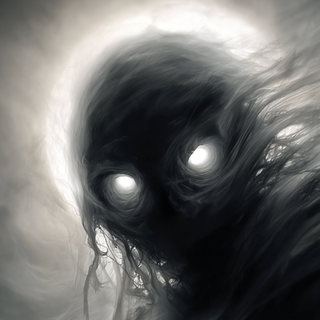
The Horror
A greater king stood against him — Cnut the Great, ruler of Denmark and England. By around 1028, Cnut had won over important Norwegian chieftains, and Olaf was forced into exile.
But Olaf would not accept defeat.
In 1030, he crossed back into Norway from Sweden with a force of supporters and attempted to reclaim his throne. Later saga accounts say he had around 3,600 men and faced a “farmer army” of 14,000. It is an extraordinary image: a king leading a small loyal force against an army four times its size.
But those figures come from sources written long after the battle and cannot be treated as reliable military records. What is clear is that Olaf faced a much stronger coalition of Norwegian opponents, including powerful chieftains who had once supported him. Among those named in later accounts were Kálfr Árnason, Thorir Hund, and Hárek of Tjøtta.
At or near Stiklestad, Olaf’s attempt to regain his throne ended in blood. Olaf II Haraldsson was killed at Stiklestad on 29 July 1030 while attempting to retake Norway.
The famous story of his final moments comes mainly from Snorri Sturluson’s Heimskringla, written around two centuries later. It is one of the most dramatic death scenes in Norse literature.
According to the saga, Olaf was struck first by an axe in the leg. Wounded, he leaned against a great rock. Then, in the image that would become part of his legend, the warrior king threw aside his sword.
The saga says two more wounds followed: a spear thrust beneath his mail into his body, and a blow to the neck. Later Christian writers saw meaning in the number — three wounds, echoing Christ’s Passion.
It is a powerful story.
But it is not eyewitness history.
The troop numbers, the axe blow, the rock, the discarded sword, the named attackers, and the precise sequence of wounds belong principally to later saga and saintly tradition. Earlier sources are far less theatrical. The Anglo-Saxon Chronicle simply records that Olaf was killed by the Norwegian people along with much of his army. Other early writers leave room for something closer to an ambush or political killing than a great saga-style last stand.
So the exact circumstances of Olaf’s death remain uncertain.
What cannot be doubted is that he died in 1030 while trying to regain the Norwegian throne.
His teenage half-brother Harald Sigurdsson fought on the same side. Harald was wounded but survived and fled east into exile. He would later become Harald Hardrada, King of Norway — and would die at Stamford Bridge in 1066, in one of the last great Viking Age invasions of England.
But on the day Olaf died, his cause was crushed.
The Modern Relic
Except death changed everything.
Tradition says Olaf’s body was taken to Nidaros — modern Trondheim — and buried near the river. Then the stories began.
People reported miracles at his grave. The sick were said to be healed. His defeat was reframed as martyrdom: not a failed attempt to recover a crown, but a holy death for Christian Norway.
About a year later, tradition says his grave was opened and his body was found undecayed. Some accounts added that his hair and nails had continued to grow. To medieval Christians, those claims were signs that Olaf was not an ordinary dead king, but a saint.
Bishop Grimkell is traditionally said to have recognised Olaf as a saint locally in 1031. His cult then spread rapidly across Norway, Scandinavia, the British Isles, and northern Europe.
Whether or not one accepts the miracle stories, the transformation was real.
The king who died fighting his own countrymen became Norway’s patron saint.
The ruler who had lost his kingdom in life gained, in death, a title that no rival could take away: Rex Perpetuus Norvegiae — the Eternal King of Norway.
The relic of his story still towers over Trondheim. At Olaf’s burial site, a church was built, then replaced by a greater church, and eventually by Nidaros Cathedral — one of Scandinavia’s greatest medieval churches. The cathedral became the leading pilgrimage destination in medieval Scandinavia, drawing visitors from across northern Europe.
It still stands today. It remains closely tied to the Norwegian monarchy, serving as the traditional place for royal coronations and consecrations.
We cannot know whether Olaf really cast aside his sword, leaned against a rock, or died from three wounds deliberately shaped to echo Christ’s Passion.
Those details belong to the legend built around him.
But the greater transformation is history.
Olaf Haraldsson died in 1030 as a deposed Viking king trying to win back his throne.
Within a year, he was being honoured as Saint Olaf.
And for almost a thousand years, Norway has remembered him as its Eternal King.
Nearby on the Dark Atlas
 The Beautiful Colour That Poisoned Everyone
A chemist invents a brilliant new green pigment that Victorians put in everything from wallpaper to sweets, and it's slowly poisoning them all.
Köping, Sweden · 1775 · 527 km away
- The Queen Who Burned Her Suitors Alive
Two kings came to propose marriage; she locked the doors and burned the hall down instead.
Uppsala, Sweden · 995 · 542 km away
 The Warship That Sank In Twenty Minutes
Sweden's most expensive warship sails less than a mile and a half from harbour before a gust of wind sends her to the bottom.
Stockholm, Sweden · 1628 · 604 km away
 The Bog Body So Fresh The Finders Called Police
Two brothers cutting peat found a face so peaceful and recent-looking they were certain they'd stumbled on a murder.
Silkeborg, Denmark · 375 BC · 843 km away