
On 19th September 1991, two German hikers, Erika and Helmut Simon, spotted a human body half‑embedded in ice at 3,210 metres altitude on a pass in the Tyrolean Alps. They assumed it was a recent casualty — a missing climber caught in bad weather.
The body was over 5,000 years old. Radiocarbon dating later placed him around 3300–3100 BCE. He became known as Ötzi, the Iceman. He is the oldest intact homicide victim yet found in Europe — and we know more about the last 48 hours of his life than we do about most medieval kings.
The Horror
Ötzi was about 45 years old, 1.6 metres tall (around 5’3”–5’5”), and weighed roughly 50 kilograms (about 110 pounds) in life. Detailed CT scans and microscopic analysis revealed 61 tattoos — fine dark lines and crosses along his lower back, knees, ankles, and other joints. Many match traditional acupuncture points, suggesting they may have been part of a therapeutic treatment for pain.
From his tissues and DNA, we know that he was lactose intolerant, carried a strain of Lyme disease, had hardened arteries, dental problems, and intestinal parasites like whipworm. Genetic analysis has identified his blood group and eye colour. His genome shows that he belonged to a now‑rare lineage most closely related to early European farmers.
In his final days, he had been in a fight. A deep cut on the right hand — across the base of the thumb, the kind of wound you get when you block a blade — was fresh when he died, probably inflicted 24–48 hours earlier. Microscopic and genetic analysis of blood residues on his clothing and equipment revealed traces from several other individuals: at least one person whose blood was found on his knife, another whose blood was on his arrowhead, and others on his coat. At least four different people’s blood was present. He had been involved in multiple violent encounters shortly before his death.
He moved uphill, into the high mountains, above the tree line, carrying a full kit: bow and arrows, a quiver, a finely made copper axe, a flint knife, a backpack frame, fire‑starting kit, and food.
Stomach content analysis, done after scientists realised the stomach had shifted position, showed that roughly two hours before he died he ate a substantial meal: fatty ibex meat, red deer, einkorn wheat, and wild plants and seeds. This was not the behaviour of someone starving or on the verge of collapse; he had taken time to eat and rest.
Then someone shot him in the back. CT scans reveal a flint‑tipped arrowhead lodged in his left shoulder, having entered from behind and slightly above. The shaft pierced the subclavian artery, causing massive internal bleeding. Death would likely have come within minutes.
Crucially, the wooden arrow shaft had been pulled out of his body — only the stone point remained. Whoever fired the shot retrieved the shaft, either to reuse it or to remove evidence.
But the attacker did not take Ötzi’s copper axe. In his era, a cast copper axe head was a rare and highly valuable object, a piece of cutting‑edge technology and a status symbol — the kind of tool that marked its owner as important. In modern terms, it was closer to a luxury car than a kitchen knife. Leaving it behind makes simple robbery or looting a weak explanation. Someone wanted Ötzi dead, not his things.
To test the murder scenario, the South Tyrol Museum of Archaeology invited Chief Inspector Alexander Horn from the Munich Criminal Investigation Department to examine the case using modern crime‑scene methods. Horn concluded that Ötzi had been ambushed while resting — surprised from behind at mid‑range by someone with enough archery skill to hit a fatal spot on the first shot. The pattern of injuries, the fresh defensive wound from an earlier fight, and the retrieval of the arrow shaft all point toward a targeted killing, not an accident or a random clash.
We don’t know why. Perhaps he had killed or badly injured someone days before. Perhaps he was caught in a feud between groups. All we can say is that he was pursued into the high pass, sat down to eat, and never saw the shot that killed him.
The Modern Relic
Ötzi is kept at the South Tyrol Museum of Archaeology in Bolzano, Italy, inside a specially designed cold cell at about −6°C and high humidity, mimicking glacier conditions to prevent decay.
Visitors peer at him through a small window. He is dark brown and leathery, his body slightly curled on one side, knees drawn up. The faint line of the shoulder wound is still visible. The flint arrowhead still lies buried in his left shoulder. The cut across his right hand still crosses the base of his thumb. Several of his tattoos can still be seen as dark lines on his skin.
More people have looked at him in the last three decades than in the entire 5,300 years between his death and his discovery. We know his diseases, his diet, his ancestry, the weather on the day he died, and the direction of the arrow that killed him. The one thing Ötzi has never given up — even to microscopes, CT scans, and homicide detectives — is the name of the person who drew that bow.
Nearby on the Dark Atlas
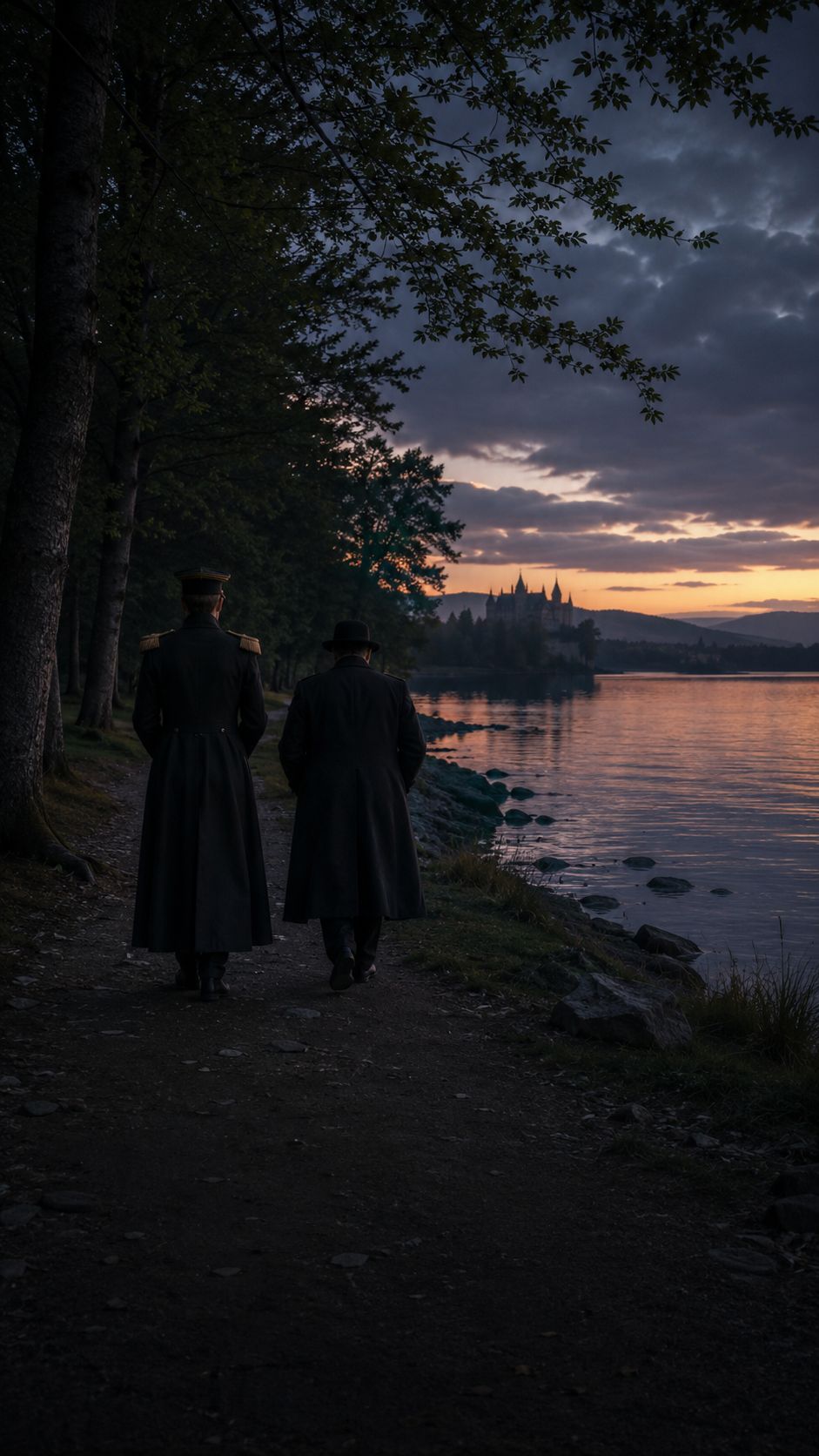 The Fairy-Tale King Who Drowned In A Lake
A dreaming king who built spectacular castles was declared insane without examination, and died in a lake days later under circumstances still unsolved.
Lake Starnberg, Germany · 1886 · 134 km away
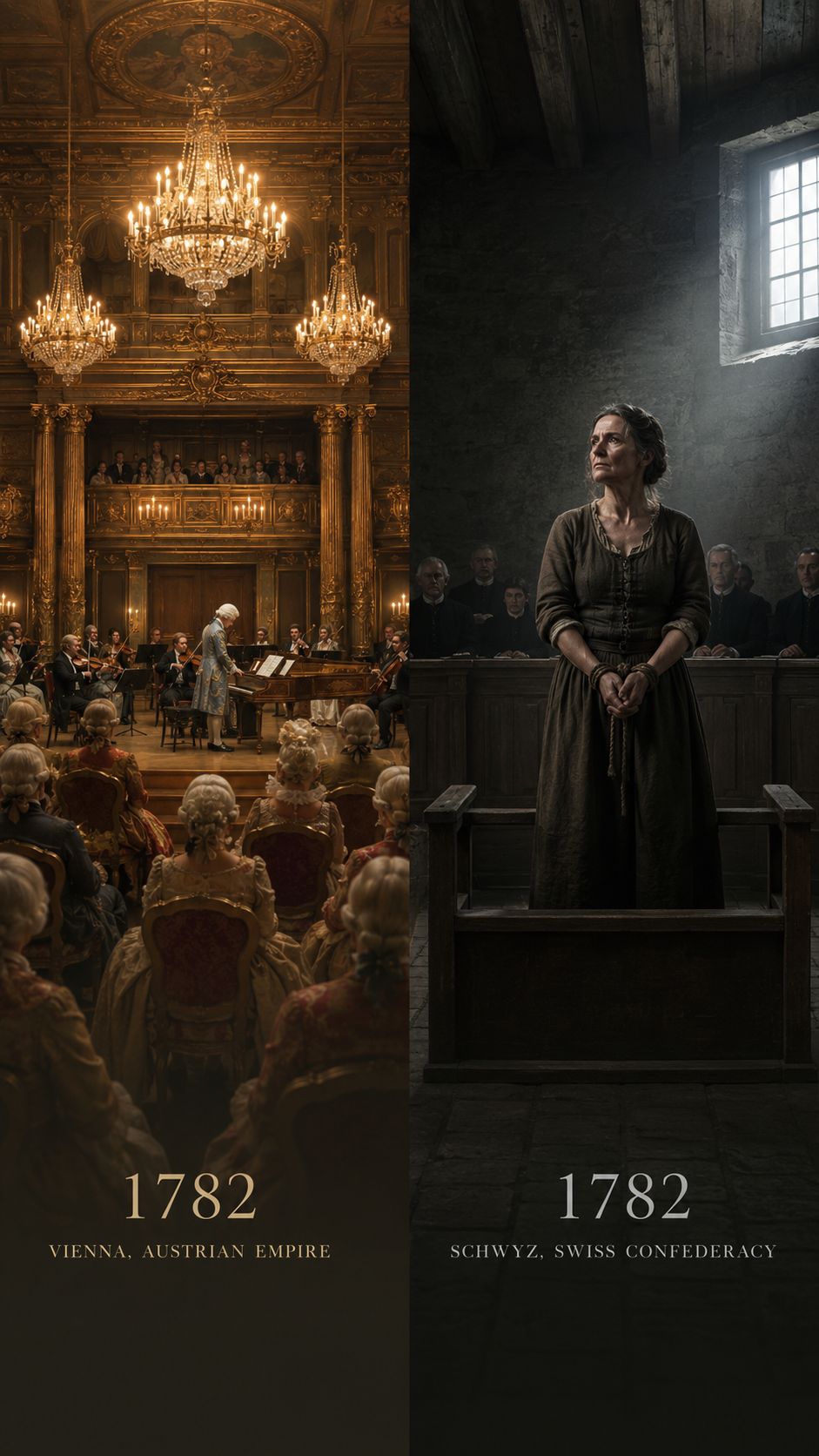 The Last Woman Executed As A Witch In Europe
A poor maid accused of poisoning a child with needles is really being punished for an affair with a powerful man.
Glarus, Switzerland · 1782 · 139 km away
- The Student Who Faced Her Killers With Composure
A twenty-one-year-old student printed leaflets denouncing Hitler, knew the risk, and faced her execution with composure that still shocks.
Munich, Germany · 1943 · 158 km away
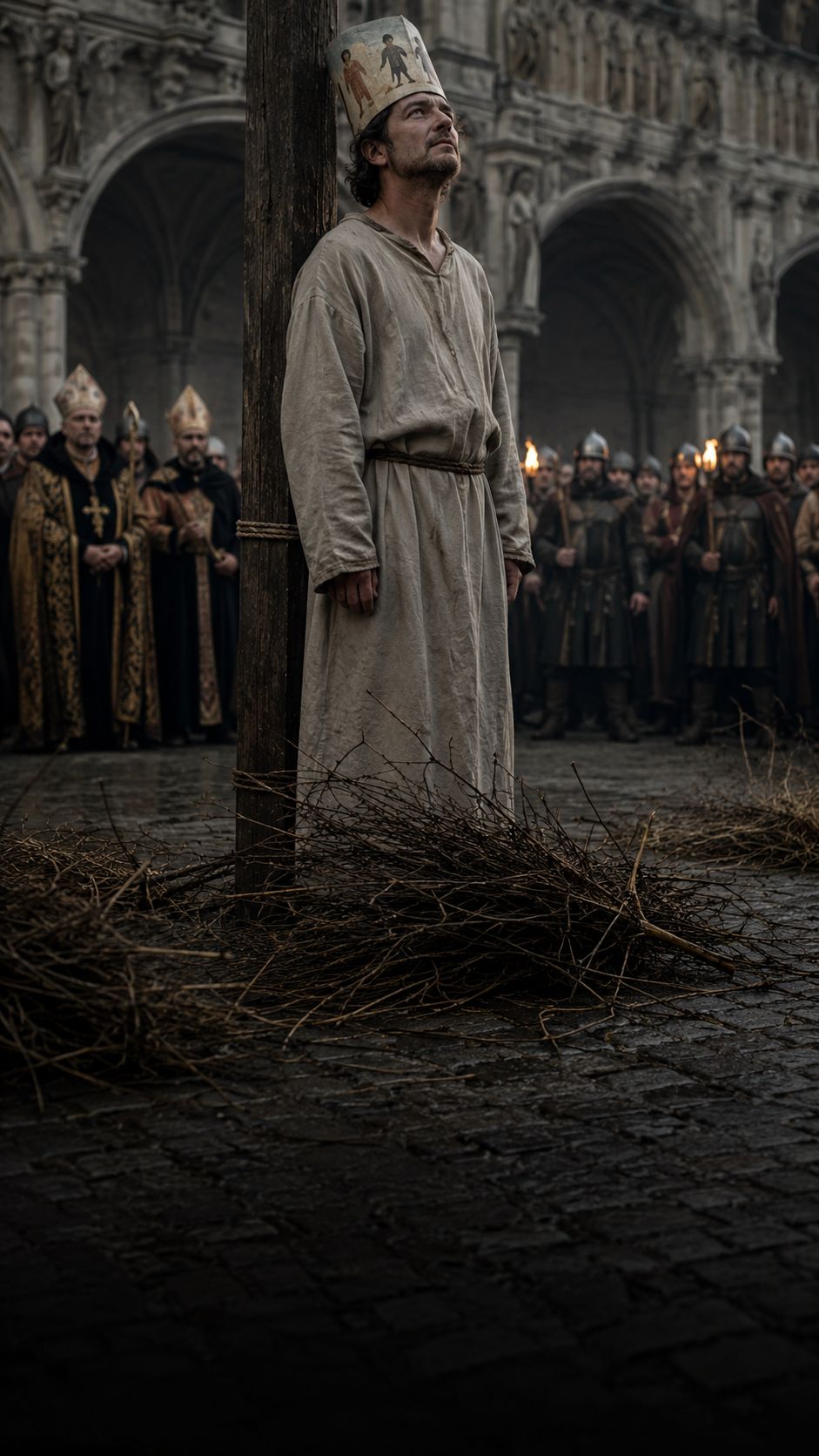 The Reformer Who Burned A Century Early
A century before Luther, a Czech priest challenged the Church's corruption and was burned alive for refusing to take back a word.
Konstanz, Germany · 1415 · 160 km away
More like this
- The Murder Dickens Turned Into Fiction
A cold, calculated murder buried a body in a Bermondsey kitchen, and became fodder for the country's most famous novelist.
Bermondsey, London, United Kingdom · 1849
- The Chair No One Is Allowed To Sit In
A murderer's cursed armchair now hangs on a museum wall, five feet off the ground, so no one can sit in it again.
Thirsk, United Kingdom · 1702
- The Poisoner Who Weaponised A Town's Sweet Shops
She poisoned an entire town's confectionery to disguise the murder of a woman she hated, killing a child she never met.
Brighton, United Kingdom · 1871
 The Rape Trial That Ended In Trial By Combat
A woman's accusation of rape led to France's last judicial duel, with her own life staked on the outcome.
Paris, France · 1386