
We remember Sparta for the 300 at Thermopylae — the ultimate warriors, the noble last stand. But there was a much darker engine driving that famous warrior society, and it is one of the most chilling institutions in all of ancient history: the Krypteia, Sparta’s secret death squad of teenage boys.
To understand it, you have to understand the terrible secret at the heart of Sparta. The famous Spartan warriors — the Spartiates — were actually a tiny elite. They did no farming, no labour, nothing but train for war their entire lives. And they could do this only because their entire society rested on the backs of a vast enslaved population called the Helots.
The Helots were the original inhabitants of the lands Sparta had conquered, reduced to a state of brutal serfdom. They worked the fields, produced all the food, and did all the labour, while the Spartans trained to fight. And crucially, the Helots vastly outnumbered their Spartan masters — by some estimates seven to one, or more. Sparta was a tiny warrior aristocracy sitting on top of a huge, resentful, enslaved majority. And the Spartans lived in constant, gnawing terror of a Helot uprising that could wipe them out.
The Horror
So they built a system of state terror to prevent it — and the centrepiece was the Krypteia.
The word comes from the Greek kryptos, meaning “hidden” or “secret.” According to the ancient sources, chiefly the biographer Plutarch, each year the Spartan authorities selected the most promising, intelligent, and ruthless young men who had come up through the agoge — Sparta’s brutal military training system that took boys from their families at the age of seven. These select youths were sent out from the city into the surrounding countryside, given nothing but a dagger and some basic food.
By day, they hid — concealing themselves in remote and out-of-the-way places, sleeping rough, staying invisible. And by night, they came out to hunt.
They crept down onto the roads and across the fields, and they murdered Helots. They killed any Helot they came across in the dark. And, most chillingly, they were specifically instructed to seek out and kill the best of them — the strongest, the fittest, the most capable, the natural leaders. The men who might one day organise a rebellion. The Krypteia was a systematic program to decapitate any potential resistance before it could form, by murdering the ablest of the enslaved in cold blood, year after year.
And here is the single most disturbing detail — the one that reveals the cold, bureaucratic heart of the whole thing. Under Spartan law, a citizen who killed a slave could still be guilty of murder and religious pollution. So the Spartans devised a legal solution. According to Plutarch, drawing on Aristotle, every single year the Ephors — the chief magistrates of Sparta — would formally, officially declare war on the Helots.
This was a legal trick of breathtaking cynicism. By declaring a formal state of war on their own enslaved population every year, the Spartans ensured that when their teenage assassins murdered unarmed Helot farmers in their sleep, it was not “murder” at all — it was an act of “war.” No guilt, no pollution, no crime. The killing of defenceless slaves was made lawful by an annual declaration of war against people who had no army, no weapons, and no way to fight back.
For the young Spartans, it was also a rite of passage — a test of their ability to survive alone in the wild, to be stealthy, to be ruthless, to kill without hesitation. A Spartan who was caught or seen was punished. It was the final, blood-soaked graduation from boy to warrior: to prove you were ready to be a Spartan soldier, you first had to hunt and kill unarmed men in the dark.
THE MODERN RELIC The terror worked, mostly, but the fear never left. And the sources record one act of Spartan treachery against the Helots so cold it has never been forgotten. The historian Thucydides tells us that during one period, the Spartans announced that any Helots who had been the bravest and most distinguished in fighting for Sparta in war should come forward, so they could be rewarded with their freedom. It was presented as an honour. Around two thousand Helots came forward — the proudest, the strongest, the ones who believed they had earned liberty.
They were exactly the men Sparta feared most: capable, brave, and natural leaders. Having identified them by getting them to step forward, the Spartans made them disappear. Thucydides records that these two thousand Helots were led away, and no one ever knew how each of them died. They were quietly murdered, all of them — killed precisely because they were the best, in the same logic that drove the Krypteia. Sparta had tricked its bravest slaves into identifying themselves, and then annihilated them.
The relic is the silence, and the land. Sparta, unlike Athens, left behind almost no great monuments — the historian Thucydides himself predicted that future generations would look at Sparta’s ruins and refuse to believe it had ever been as powerful as its reputation claimed, because there was so little there to see. And that emptiness is fitting, because Sparta’s true foundation was never marble temples — it was fear. You can visit the site of ancient Sparta in the Evrotas valley in the Peloponnese today, ringed by the mountains, including the towering Mount Taygetos — the same mountain from which, legend says, the Spartans threw babies judged too weak to be worth raising. There is little to see. But under that quiet Greek farmland lies the memory of the Helots, the vast enslaved people who fed the legend of Sparta, and who were hunted in the dark, year after year, by boys with daggers — in a country that declared war on its own slaves so their murder would never be called a crime.
Nearby on the Dark Atlas
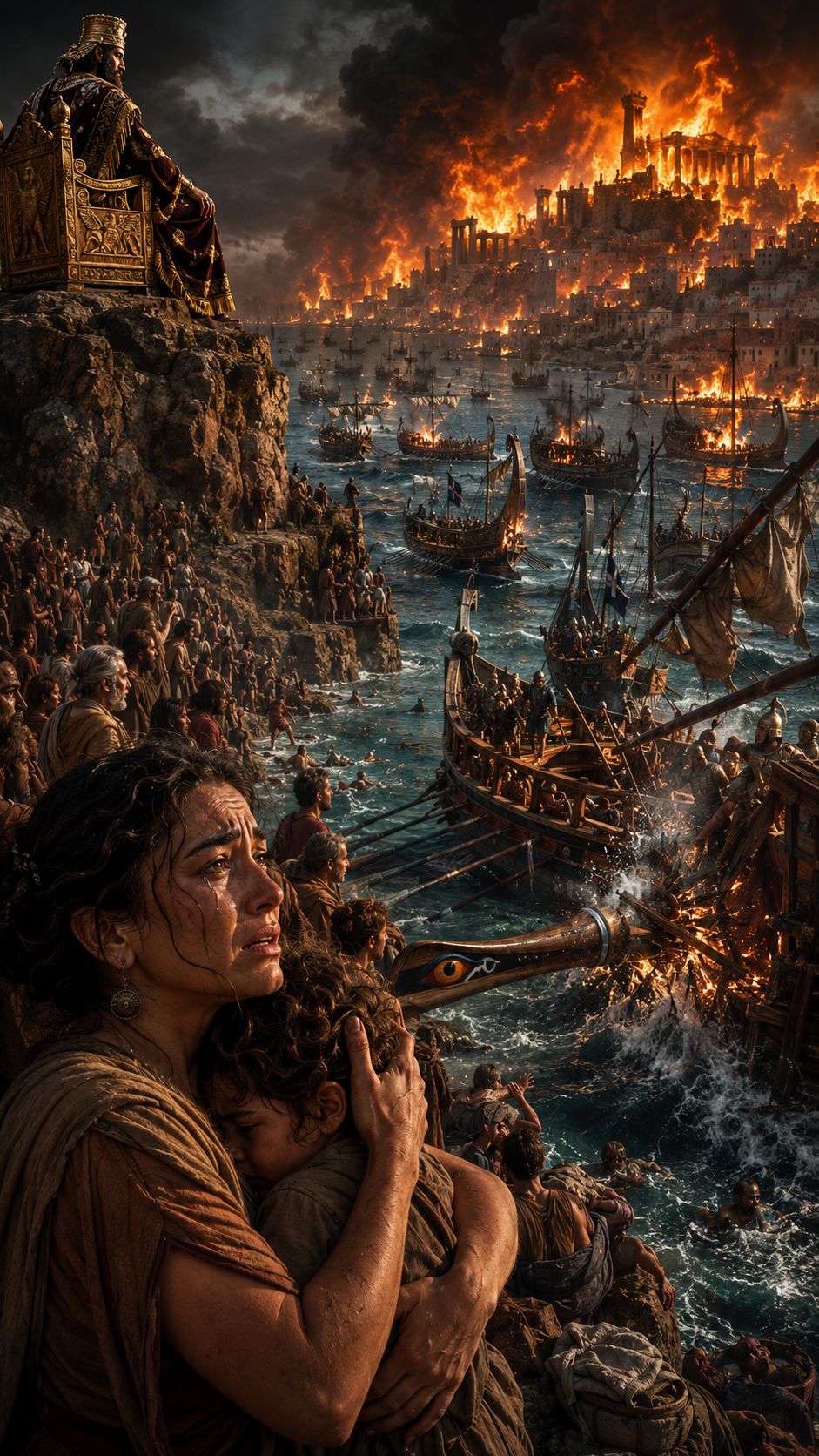 The Wooden Wall That Saved Athens
A cryptic oracle's prophecy about a wooden wall led Athens to lure the Persian fleet into a narrow strait and destroy it before Xerxes' eyes.
Salamis, Greece · 480 BC · 137 km away
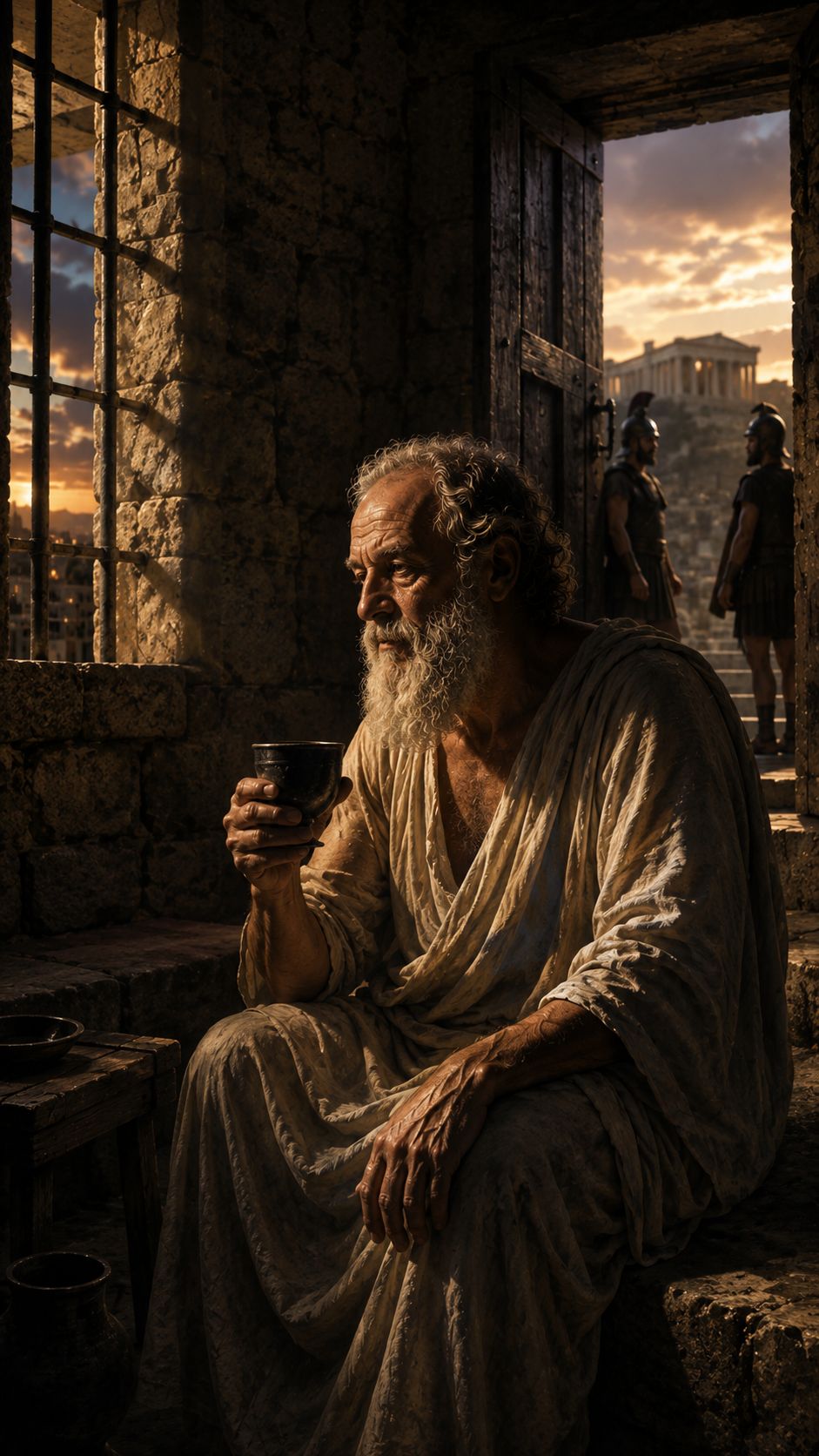 The Old Man Athens Put On Trial For Asking Questions
A seventy-year-old philosopher was condemned for corrupting the youth — his real crime was making powerful men look foolish.
Athens, Greece · 399 BC · 152 km away
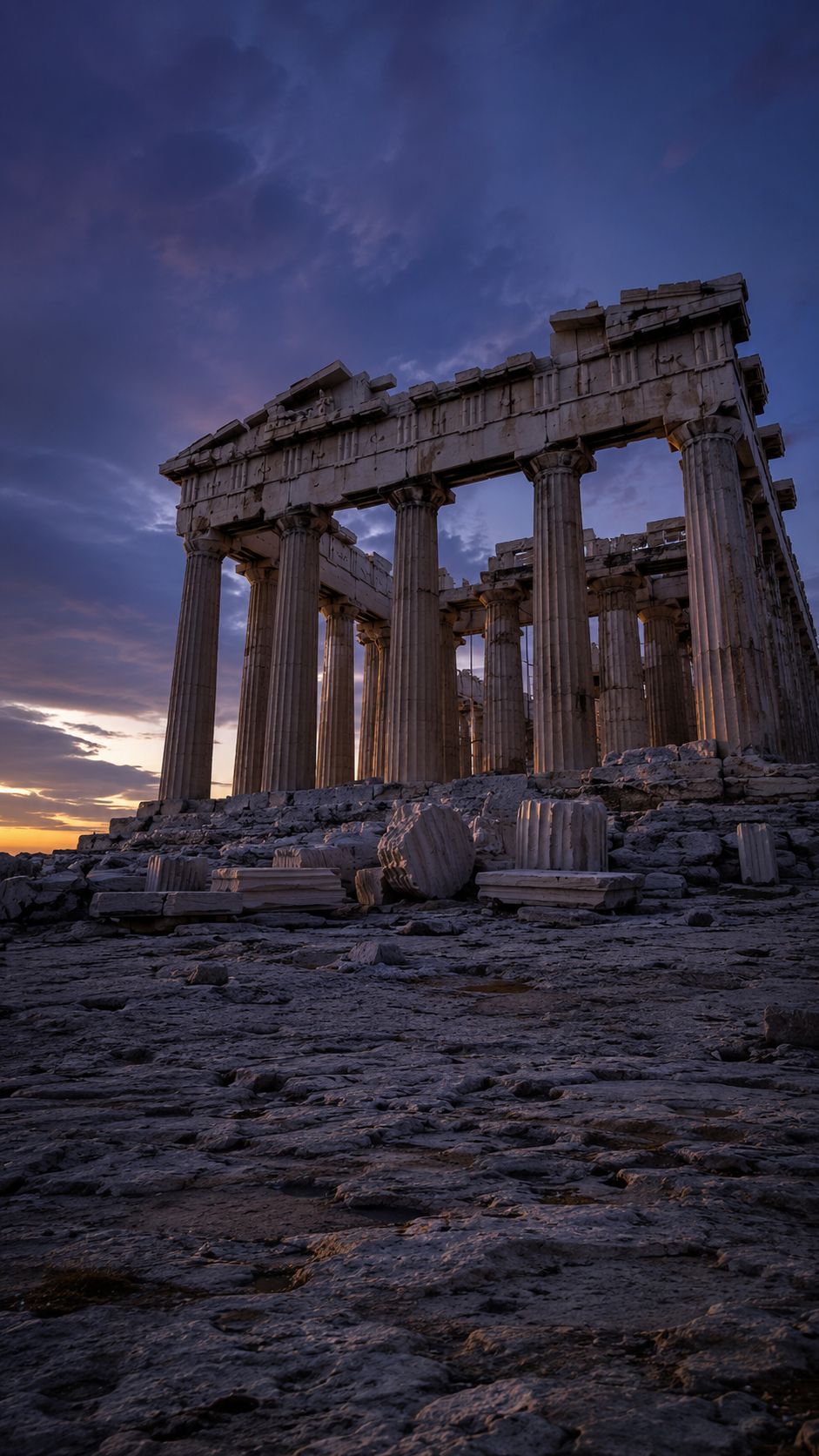 The Night One Shell Broke A Temple
A temple that survived 2,100 years of empires and earthquakes is gutted in a single evening by one gunpowder-filled gamble.
Acropolis, Athens, Greece · 1687 · 152 km away
 The Runner Who Died Delivering Victory
A professional long-distance runner is sent to beg Sparta for help, then races on to deliver news that costs him everything.
Marathon, Greece · 490 BC · 181 km away