
Michel Ney was the most famous soldier in France after Napoleon himself. A barrel-maker’s son who rose to Marshal of the Empire, he had fought through nearly every great battle of the Napoleonic Wars. During the catastrophic retreat from Moscow in 1812, he commanded the rearguard, musket in hand, and was popularly said to be the last Frenchman to leave Russian soil. Napoleon gave him the title history remembers: le Brave des Braves — the Bravest of the Brave.
The Horror
His downfall was a promise. When Napoleon escaped exile in 1815, Ney — who had sworn loyalty to the restored King Louis XVIII — vowed to bring his old emperor back to Paris “in an iron cage.” Instead, when he stood before Napoleon at Lons-le-Saunier, his soldiers refusing to fire on their emperor, Ney defected on the spot. He fought at Waterloo like a man begging for death — five horses killed under him, leading the final charges on foot, shouting to his men: “Come and see how a marshal of France meets his death!” But death would not take him on the battlefield.
The restored monarchy took him instead. Arrested, tried for treason before the Chamber of Peers in the Luxembourg Palace, he was condemned to death by a vote of 139 to 22. In the Conciergerie prison, his cell sat directly above the room where Marie Antoinette had awaited her own execution twenty-two years earlier. On the night the sentence came down, he said simply: “I have fought a hundred battles for France, and not one against her.”
At dawn on the 7th of December 1815, he was driven to a quiet wall near the Luxembourg Gardens — the execution deliberately hidden from the public, at first light, with no crowd, because the King’s men feared what Paris would do if it watched. Ney stepped from the carriage, walked to within a few paces of the wall, and turned to face the muskets. He refused the blindfold — “Are you unaware that I have spent twenty-five years staring down cannonballs and bullets?” He refused to kneel.
And then, granted the last privilege of his rank, the condemned man took command of his own execution. He gave the firing squad the order to aim. And he gave the order to fire. Twelve musket balls struck him, and the Bravest of the Brave fell mid-sentence, still protesting his innocence — the last order of his career the one that killed him.
The Modern Relic
Some Parisians came afterwards and dipped handkerchiefs in his blood, keeping them as relics of a martyr. His widow was stripped of everything and spent fifteen years fighting to restore his name. And when France’s mood turned, it turned completely: in 1853 a bronze statue of Ney, sword raised mid-charge, was erected steps from the spot where he fell, near the Avenue de l’Observatoire. You can stand in front of it today, on the same ground where he faced the muskets.
His grave lies in Père Lachaise Cemetery — though for two centuries a strange legend has refused to die: that the firing squad deliberately missed, that Ney escaped to America, and that a French-speaking schoolteacher in North Carolina named Peter Stuart Ney, who died in 1846 whispering “I am Marshal Ney of France,” was the Bravest of the Brave living out his impossible second life.
“I have fought a hundred battles for France, and not one against her.”Marshal Michel Ney, 6 December 1815
- Atteridge, A. H. — The Bravest of the Brave: Marshal Ney (1912)
- Chamber of Peers trial record, December 1815
Nearby on the Dark Atlas
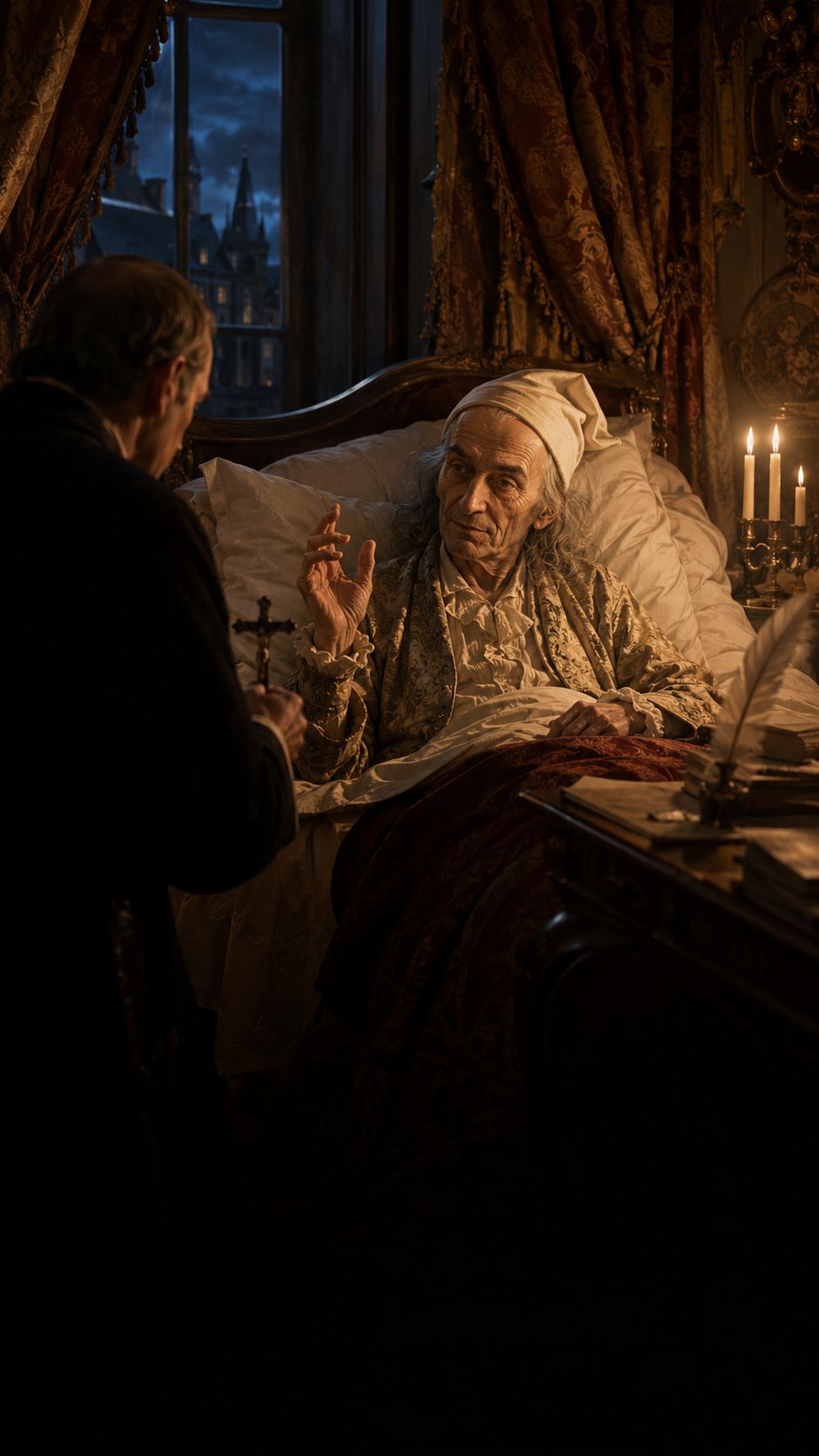 Voltaire's Final Battle With The Church
The Church tried to deny him a grave, but revolutionaries would carry his body to a hero's tomb thirteen years later.
Paris, France · 1778 · 1.1 km away
- Burned for Mistranslating a Single Line
A single disputed word in a translation of Plato was enough to have him tortured and burned alongside his own books.
Place Maubert, Paris, France · 1546 · 1.6 km away
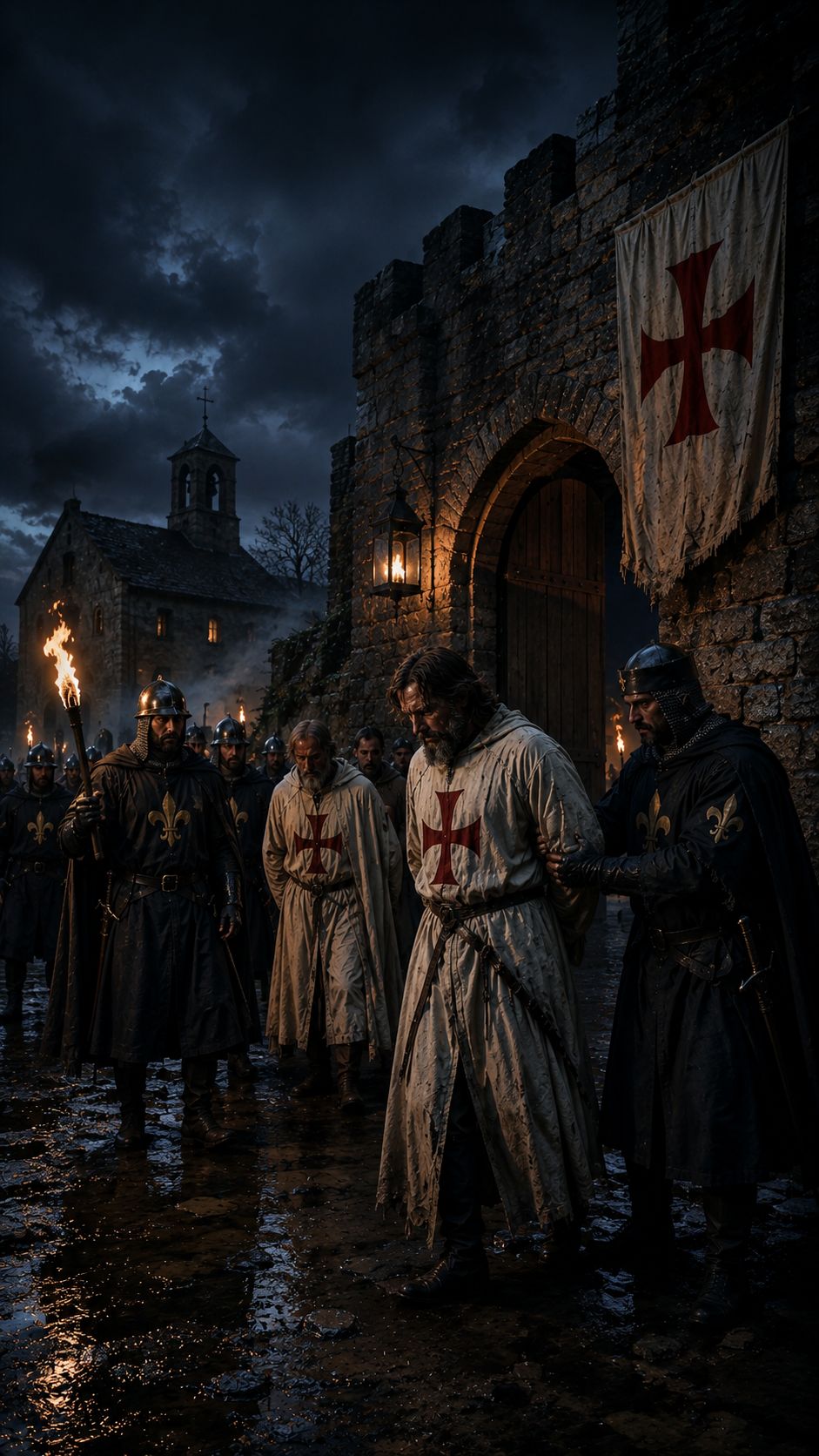 The Templar Who Cursed A King From The Flames
Arrested on a single dawn across France on fabricated charges, the last Templar grand master burned still proclaiming his order's innocence.
Île de la Cité, Paris, France · 1314 · 2.0 km away
- The Poisoner Of The Sun King's Court
Behind Versailles' glittering court, a fortune-teller ran a thriving trade selling poison to desperate noblewomen.
Place de Grève, Paris, France · 1680 · 2.3 km away