


53
Casa Matusita — Peru’s Most Terrifying Urban Legend
House
Peru
Jr. Junín 260, Cercado de Lima 15001, Peru
A notorious building in Lima where violent hauntings, madness, and mysterious deaths sparked one of Latin America’s most feared paranormal legends.
Discover the dark legends of Casa Matusita, the infamous Lima building linked to madness, violent hauntings, and one of Peru’s most chilling ghost stories.
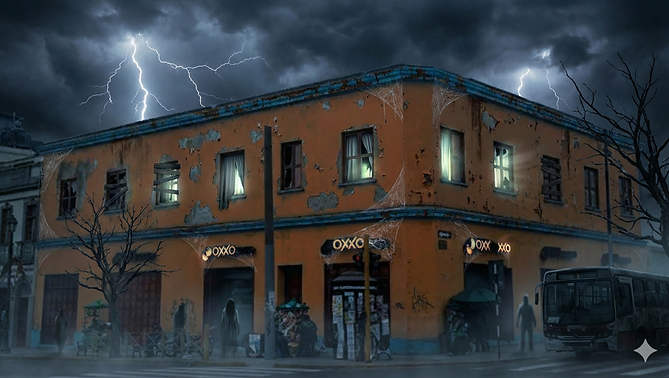
In the busy streets of Lima, Peru stands a building tied to one of the most disturbing urban legends in South America: Casa Matusita. Often described as the most haunted house in Peru, the building’s reputation comes from decades of stories involving violence, madness, and a mysterious upper floor that few people claim to have entered.
The building sits in the historic district near the intersection of Garcilaso de la Vega Avenue and Spain Avenue. While the structure itself appears unremarkable from the outside, the second floor became the focus of rumors that spread throughout Lima during the twentieth century.
According to the most widely repeated story, a brutal family tragedy occurred inside the building decades ago.
One version of the legend claims that a man living in the house suffered a mental breakdown and murdered members of his family before taking his own life. Another story describes a foreign employee living there who allegedly experienced terrifying visions after entering the building, eventually losing his sanity.
The details vary depending on who tells the story.
Some versions place the events in the nineteenth century, while others claim they occurred much later. Over time the stories blended together, creating a narrative that the building itself was somehow cursed.
The legend gained wider attention in the 1980s when a television journalist reportedly attempted to spend the night inside the house during a live broadcast. According to the story, he panicked during the investigation and fled the building, claiming he had experienced something horrifying inside.
Whether this event occurred exactly as described remains disputed.
Despite the dramatic claims attached to the building, historians and researchers have found little reliable evidence confirming the violent incidents described in the legend. Many believe the story of Casa Matusita developed through a combination of rumor, media attention, and Lima’s long tradition of supernatural folklore.
Urban legends often grow around ordinary buildings that happen to remain empty or unused for long periods of time. An abandoned upper floor, sealed rooms, or a history of changing tenants can quickly attract speculation about what might have happened inside.
Casa Matusita became one of Lima’s most famous examples of this phenomenon.
For years the building’s second floor remained closed, fueling curiosity and allowing the legend to grow. Locals passed along stories about strange noises, shadowy figures seen in windows, or people who entered the building and emerged terrified.
Whether any supernatural events ever occurred there remains uncertain.
What is certain is that Casa Matusita became a powerful piece of Peruvian urban folklore. The house represents how quickly rumors can transform an ordinary building into a cultural mystery.
In the end, the haunting of Casa Matusita may say less about spirits and more about the power of storytelling in a city where history, imagination, and fear often blend into legends that refuse to disappear.
That’s why it never burns down, never gets sealed for good, and never stops circulating. It doesn’t need walls—only repetition.